Introducing PECs in the Home Environment
 Toddlers, Preschoolers

Before you read
In this article, we share general information about some areas of development and the differences that might be seen in autistic children.
Every child with autism is unique and different. While they may share some similar traits, it’s important to know that each child will have their own learning styles, interests and preferences.
This information is designed to help you understand and support your autistic child. Always speak to their therapist/s before introducing any new strategies in the home.
Some of the strategies might be helpful for children without autism or without a diagnosis. We recommend speaking with your child’s early learning centre, your GP and/or your family network for more support.
What is PECS?
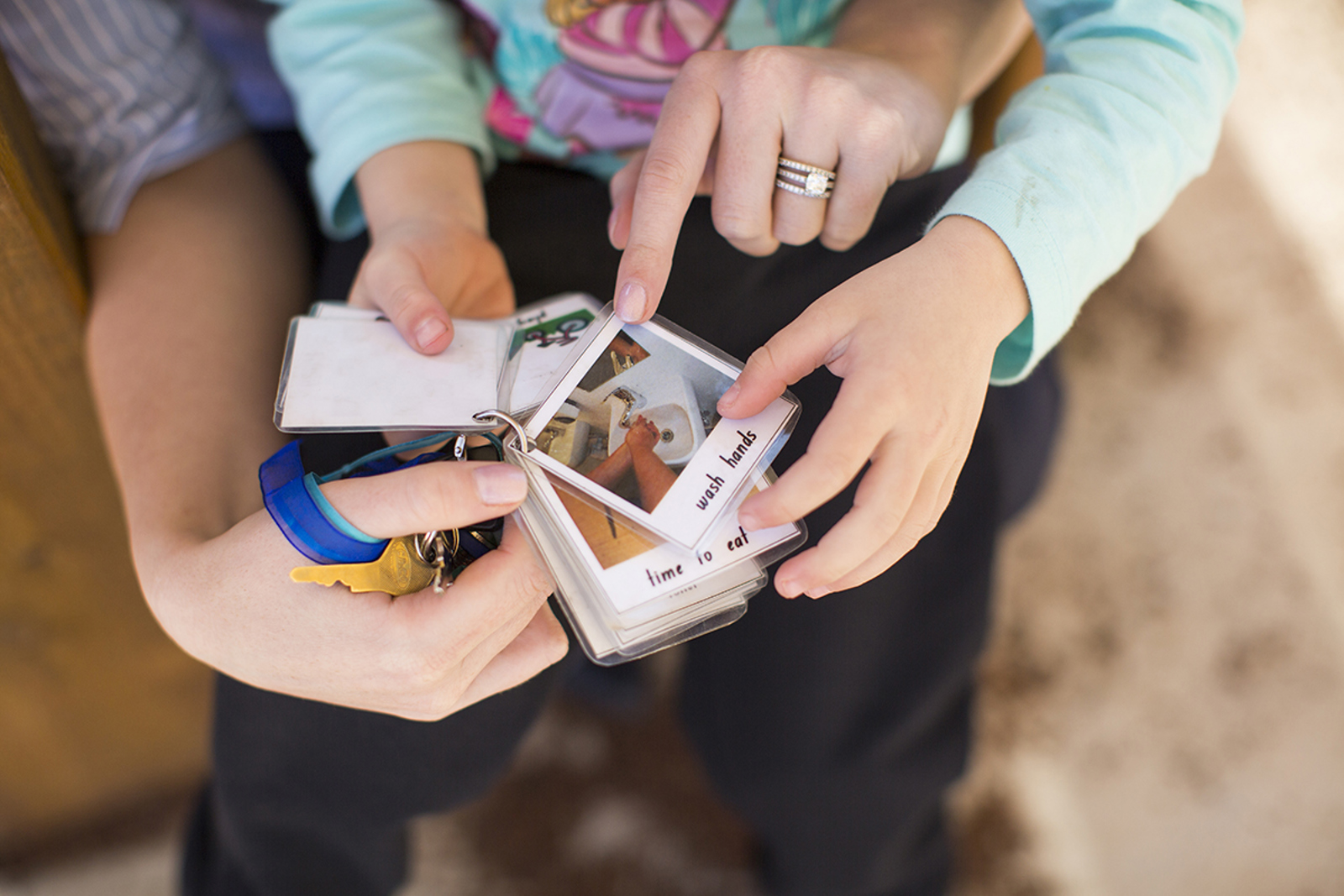
PECS stands for Picture Exchange Communication system. It is a communication method designed to support people, particularly Autistic children or those with developmental or communication disorders, to communicate their needs and wants using pictures, rather than words.
What PECS can help with
PECS can help an individual to; request an item, to express needs and feeling, build early communication skills and with this skill can see a reduction in frustrations and behavioural challenges.
How PECS works
-
The person making a request picks up a picture card (for example; child picks up picture of their drink bottle)
-
Hands the picture to a communication partner (for example; parent)
-
Partner takes the picture and gives the item in exchange (for example; parent takes the picture of the drink bottle and hands the child their drink bottle)
Where to start - Stage 1
PECS has 6 stages and it’s important to start at; Stage 1- ‘How to communicate’. The goal of this stage is for the person to learn to give a picture to ask for something they want.
To start at stage 1, think of ONE THING that your child LOVES, that will be motivating for them to request frequently; this could include bubbles, car, Ipad, TV or a particular snack.
- Print off a small picture of this item (laminate to maintain durability)
- Have the real item ready, in view but out of reach
- Wait for the child to show interest in the item
- Where possible have two adults present; When the child reaches for the item have the Communication Partner (person 1) sit/stand in front of the child, have the Physical Prompter (person 2) gently guide the child’s hand to pick up the picture, reach towards the Communication Partner and put the picture in the Communication Partner’s hand.
- Communication Partner then IMMEDIATELY reward the child with requested items whilst saying the word (for example “drink”)- timing is important in this step.
Repeat this picture exchange several times a day where possible and in context. Keep the sessions fun, short and successful!
What not to do in Stage 1
- Do not ask the child “What do you want?”
- Do not expect them to say a word or point
- Do not test them
- Do not take away favourite items
- Do not use the word “no” or correction
This stage is about building trust and success.
When to move onto stage 2
Moving onto the next stage of our child’s PECS journey is recommended when; your child is able to independently pick up the picture (without prompting), hand the picture to you without help and do this consistently.